
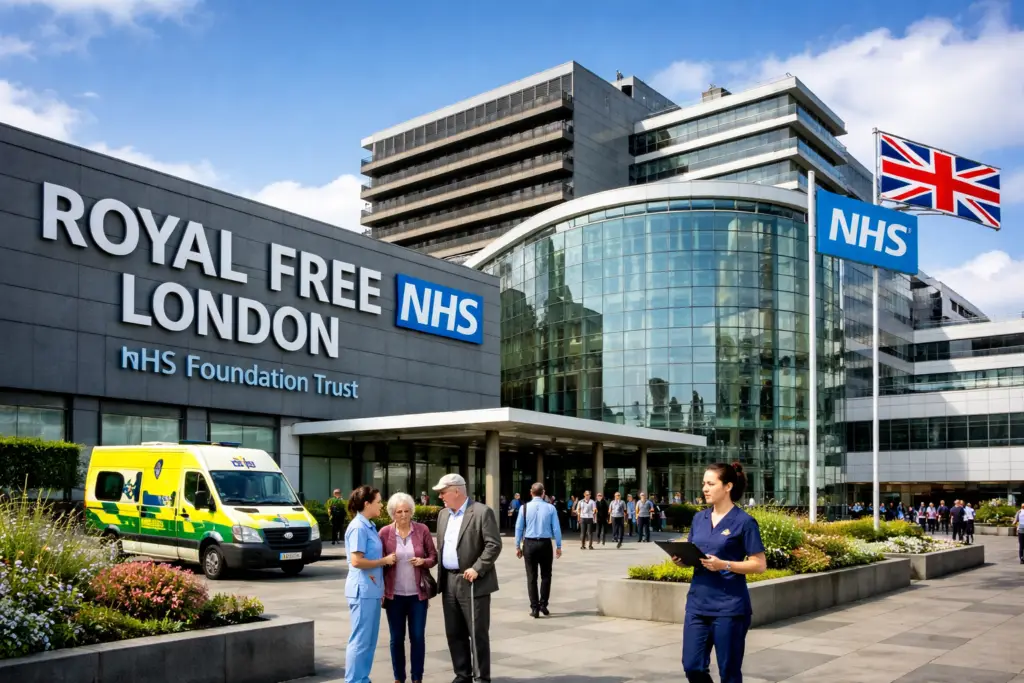
Royal Free London NHS Foundation Trust
Establishment
This healthcare institution was established in the United Kingdom in 2012. It is a major public organization that operates in conjunction with the National Health Service (NHS). From its inception, the objective of this hospital has been to collaborate with various healthcare centers.
The institution was initially formed based on the foundation of the Royal Free Hampstead NHS Trust. Subsequently, in 2014, it was merged with the Barnet and Chase Farm Hospitals NHS Trust. As a result, the hospital is today capable of successfully providing medical treatment to hundreds of thousands of patients.
History
The hospital was originally linked to the Royal Free Hospital, an institution with a history dating back to 1828. This hospital was established with the specific aim of providing free medical treatment to patients, a mission that fueled its rapid growth and development.
Over time, new treatment methodologies and modern medical equipment were adopted. Consequently, it has evolved from being merely a healthcare facility into a prominent center for medical education and research.
Following the introduction of the NHS system, additional healthcare centers were integrated into the organization, thereby transforming it into a major trust. Today, this Trust is recognized as one of the leading and most modern hospital networks in the country.
Infrastructure and Facilities
Modern Buildings
The buildings of this hospital have been designed to create a clean, hygienic, and organized environment for patients. It houses various specialized departments catering to patients with different ailments, ensuring that patients receive systematic treatment and that the medical staff can work with maximum efficiency.
Medical Department
Facilities such as MRI, CT scans, and X-rays are available here to aid in the diagnosis of patients’ conditions; additionally, the department is equipped with a range of other modern medical machinery.
Emergency and ICU Department
For accidents or severe injuries sustained during sports activities, a dedicated team of doctors and nurses is available in this department 24 hours a day to provide safe and effective treatment to patients.
Facilities for Family Members
For the family members accompanying patients, the hospital provides advanced amenities including a comfortable waiting area, a cafeteria, as well as counseling and support services.
Smart and Digital Health System
Patient records and medical histories are maintained digitally within this system, allowing doctors to access information easily and expedite the treatment process. Facilities such as online appointment booking are also available here.
Departments and Specializations
Gastroenterology
This department specializes in the treatment of conditions affecting the stomach, liver, and digestive system—such as gas-related issues and ulcers.
Neurology
This department is dedicated to the diagnosis and treatment of disorders related to the brain and nervous system, including strokes, epilepsy, and other severe cranial conditions.
Cardiology
This department focuses on the treatment of heart-related conditions, such as heart attacks, high blood pressure, irregular heartbeats (arrhythmias), and heart failure.
Facilities such as ECG are available here.
Orthopedics
This department is established to treat conditions affecting the bones and muscles, including fractures, joint replacement needs, and spinal disorders.
Oncology
This department provides comprehensive cancer treatment, offering facilities such as chemotherapy, radiotherapy, and surgery.
Doctors and Staff Physicians
1. Doctor Qualifications
The doctors at this hospital hold an MBBS degree or an equivalent qualification. To practice in UP, it is mandatory for these doctors to be registered with the General Medical Council. Furthermore, to specialize in various fields, many doctors at this hospital pursue higher degrees such as MD, MS, or MRCP. The primary responsibility of a doctor is to thoroughly diagnose a patient’s ailment and provide appropriate medical treatment. When necessary, these doctors also perform surgeries.
2. Nursing Staff
The nursing staff plays a pivotal role in this hospital. To qualify as a nurse, individuals must obtain a B.Sc. in Nursing or a Diploma in Nursing, and they are also required to register with the Nursing and Midwifery Council (NMC). The duties of the nurses at this hospital include providing excellent care to patients, administering medications, and continuously monitoring the patients’ condition. The nurses at this hospital strictly adhere to the instructions provided by the doctors.
3. Technicians
The technicians at this hospital possess specialized degrees or diplomas in their respective fields. The work of the technicians encompasses laboratory testing, radiography, and physiotherapy. Their specific responsibilities include conducting blood tests, performing X-rays, and carrying out CT scans and MRIs.
Patient Care Services
1. OPD Services
The OPD (Outpatient Department) is a hospital service where patients do not require admission to the facility. Here, patients schedule appointments directly with a doctor; following a medical examination, the doctor provides a diagnosis and offers medical advice. A variety of specialist doctors are available on-site to examine patients, provide the best possible treatment, and prescribe medications. Routine check-ups and follow-up consultations are also conducted within this hospital.
2. Emergency Services
Emergency services constitute a vital component of the hospital’s operations; the hospital’s emergency ward remains open 24/7. Patients requiring immediate medical attention—such as in cases of accidents, heart attacks, or sudden illnesses—receive prompt treatment here at any time. In instances where a patient’s condition is critical, they are accorded priority treatment based on the severity of their situation.
3. Ambulance Services
Ambulance services are also available at this hospital, facilitating the rapid transportation of patients to the facility during emergencies. The hospital’s ambulances are staffed by trained personnel who administer first aid and preliminary treatment to patients while en route, thereby ensuring the patient’s safety and minimizing life-threatening risks. Additionally, this ambulance service assists in transferring patients from one hospital to another when necessary.
4. Pharmacy Services
This hospital also provides comprehensive pharmacy services. Under this service, all medications prescribed by the hospital’s doctors are readily available for purchase. The pharmacists guide patients regarding the correct medication and its proper usage, and also provide information concerning potential side effects.
Digital Machine Technology
1. Advanced Equipment
This hospital utilizes machines featuring advanced technology, such as MRI, CT scans, PET scans, and ICU monitoring systems. These machines provide precise information regarding the interior of a patient’s body, enabling doctors to gain a thorough understanding of the ailment and initiate treatment in a timely manner. Consequently, patients receive the highest quality of care. Furthermore, surgeries performed using this advanced technology result in reduced pain for the patient and facilitate a faster recovery.
2. Digital Records
Through digital records, a patient’s medical reports, medication history, and check-up details are securely stored in a centralized location. This allows doctors, nurses, and other medical staff to access a patient’s medical records with just a single click. This system saves valuable time for doctors and significantly reduces the volume of paperwork within the hospital.
3. Telemedicine
Telemedicine is a hospital service that allows patients—whether at home or while traveling—to consult with a doctor via video call. Through this medium, doctors can review the patient’s medical reports and provide appropriate advice. This service reduces the need for physical visits to the hospital and is particularly beneficial for elderly individuals or those in critical condition.
Community and Social Works
This is a hospital that does not limit itself to treating patients solely within its premises; rather, it actively engages with the community to provide care and healing through various social initiatives.
1. Community Services
The social workers associated with this hospital work directly within the community, placing special emphasis on addressing the healthcare needs of people across all social groups. The Trust’s scope of work extends beyond the hospital walls, focusing significantly on the treatment and care of patients in their own environments. Consequently, it offers a range of facilities for community members, such as community clinics, home care services, and rehabilitation programs. The primary objective is to ensure that patients receive appropriate healthcare services within their own local areas. This approach not only alleviates the burden on the hospital but also enhances convenience and accessibility for the patients.
2. Social Work Support
The social workers of this Trust are dedicated to understanding and addressing the social and psychological needs of both the patients and their families. They provide assistance in situations involving financial difficulties and mental stress. Furthermore, they assist patients with discharge planning to ensure that they continue to receive high-quality care and support even after leaving the hospital.
3. Charity and Social Programs
Through various charitable initiatives affiliated with the Trust, specific programs are organized to provide additional support and amenities to patients and the wider community. These initiatives serve to extend vital assistance to the needy and the underprivileged sections of society.
Challenges and Problems
Like many other healthcare institutions, this Trust faces numerous challenges and problems.
1. Funding and Financial Pressure
The Trust is required to provide treatment and services to a large number of patients within a limited budget. Due to funding constraints within the NHS, difficulties arise in acquiring modern equipment, recruiting staff, and improving infrastructure. This can potentially lead to a reduction in the quality of patient care and social support services.
2. Staff Shortages
A shortage of specialist doctors, nurses, and support staff can give rise to a host of problems and challenges. For instance, the excessive workload and long working hours placed upon the staff can result in issues such as fatigue and mental stress. Consequently, both the operational efficiency of the staff and doctors, as well as the quality of patient care, are adversely affected.
3. Infrastructure and Capacity Issues
Some of the hospitals and buildings are aging and possess limited capacity. A shortage of ICU beds and emergency services leads to deficiencies in the treatment and care provided to patients.
Future Plans and Vision
The future vision of the Royal Free London NHS Foundation Trust is to enhance the use of modern equipment and AI, thereby enabling patients to receive high-quality medical treatment and care.
1. World-Class Healthcare Delivery
The primary objective of this Trust is to provide “world-class healthcare.” This will ensure that patients have access to modern treatments and superior services. Additionally, emphasis will be placed on research and medical education to further strengthen the healthcare system.
2. Digital Transformation and Innovation
In the future, the Trust intends to maximize its utilization of digital technologies—such as Electronic Health Records, data analytics, and AI-based systems. This will accelerate the delivery of care and enhance its accuracy, while simultaneously improving the patient experience. The Trust aims to make healthcare delivery more streamlined and accessible.
3. Focus on Prevention and Population Health
The Trust is not limited merely to the treatment of illnesses; it also places significant focus on disease prevention. Its goal is to enable individuals across all communities to lead healthy lives. To this end, it implements various programs designed to encourage healthy living. This approach will lead to improved long-term health outcomes and reduce the strain on the healthcare system.