Gustave Roussy Institute (Villejuif)
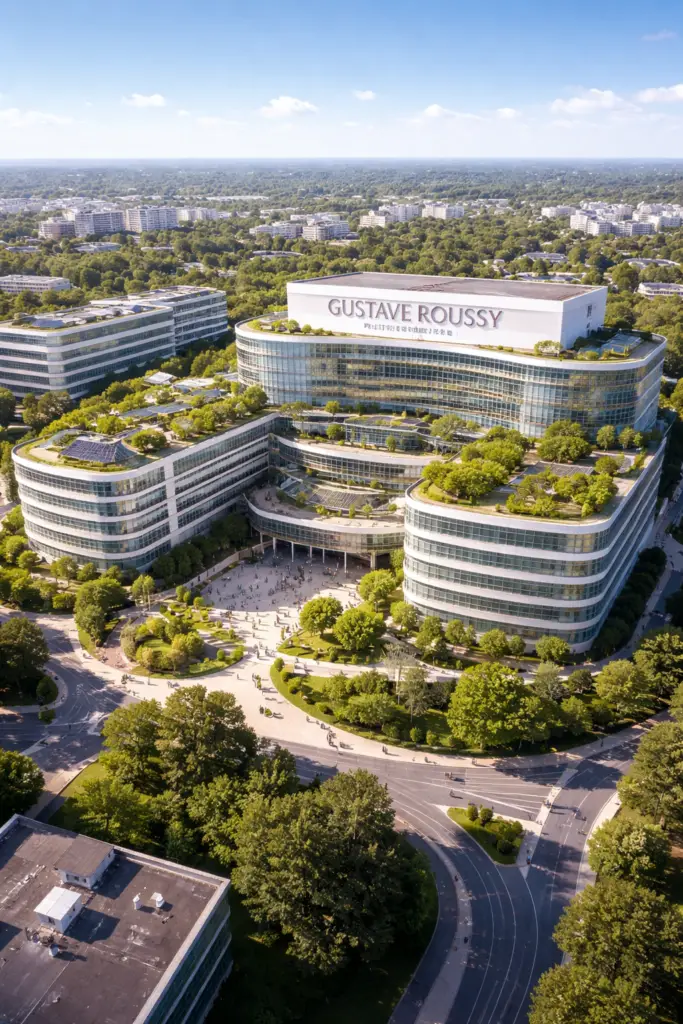
Gustave Roussy Institute: Europe's Leading Cancer Center for Advanced Oncology Care
Why Gustave Roussy Institute Is Considered One of Europe's Premier Cancer Centers
Cancer treatment has evolved dramatically over the past few decades, but only a handful of institutions have consistently remained at the forefront of innovation. Among them, Gustave Roussy Institute in Villejuif, France, has earned worldwide recognition for combining world-class patient care, cutting-edge scientific research, and advanced medical education under one roof.
Unlike many hospitals that primarily focus on treatment, Gustave Roussy follows an integrated oncology model where physicians, surgeons, researchers, genetic specialists, and clinical trial teams collaborate throughout every stage of a patient’s journey. This multidisciplinary approach has helped establish the institute as Europe’s leading dedicated cancer center.
A Legacy Built Around Cancer Innovation
The institute traces its origins back to the early twentieth century when Professor Gustave Roussy envisioned a healthcare system where cancer patients would benefit simultaneously from treatment, research, and education. That philosophy continues today and remains one of the hospital’s defining strengths.
Over decades, the institute has expanded into a comprehensive cancer campus featuring modern laboratories, specialized treatment facilities, molecular medicine centers, and internationally recognized research departments.
Location and Accessibility
Located in Villejuif, just south of Paris, Gustave Roussy provides convenient access for both domestic and international patients.
Its location offers several advantages:
- Easy connection from Paris airports
- Excellent public transportation
- Nearby accommodation options
- Dedicated international patient services
- Modern outpatient facilities
Thousands of patients from Europe, the Middle East, Asia, Africa, and the Americas visit the institute each year seeking specialized oncology care.
Comprehensive Cancer Care Under One Roof
One of the institute’s greatest strengths is its ability to manage nearly every type of cancer within a single integrated system.
Major specialties include:
- Breast Cancer
- Lung Cancer
- Colorectal Cancer
- Prostate Cancer
- Brain Tumors
- Blood Cancers
- Bone & Soft Tissue Sarcoma
- Gynecologic Oncology
- Pediatric Oncology
- Rare and Complex Tumors
- Head and Neck Cancer
- Digestive Oncology
This comprehensive approach minimizes delays between diagnosis, treatment planning, surgery, radiotherapy, chemotherapy, and follow-up care.
Multidisciplinary Decision-Making
Instead of relying on a single physician’s opinion, Gustave Roussy emphasizes multidisciplinary tumor boards.
Each patient’s case may involve:
- Medical oncologists
- Surgical oncologists
- Radiation oncologists
- Radiologists
- Pathologists
- Molecular biologists
- Genetic counselors
- Clinical trial specialists
Together, these experts evaluate imaging, pathology reports, genomic testing, and medical history before recommending a personalized treatment strategy.
Precision Medicine at the Core
Modern cancer treatment increasingly depends on understanding the genetic characteristics of each tumor rather than focusing solely on its location.
Gustave Roussy has invested heavily in:
- Molecular diagnostics
- Tumor DNA sequencing
- Biomarker testing
- Personalized medicine
- Genomic profiling
These technologies help physicians select therapies that are more likely to benefit individual patients while avoiding unnecessary treatments.
Advanced Treatment Technologies
Patients have access to a wide range of modern oncology treatments, including:
- Robotic-assisted surgery
- Minimally invasive procedures
- Advanced chemotherapy protocols
- Precision radiotherapy
- Targeted therapy
- Immunotherapy
- Interventional radiology
- Stem cell transplantation (selected conditions)
The institute continuously updates its infrastructure to incorporate emerging technologies that improve treatment accuracy while reducing side effects.
Global Leadership in Clinical Research
Research is one of Gustave Roussy’s defining characteristics.
Scientists and clinicians collaborate in areas such as:
- Cancer immunology
- DNA repair mechanisms
- Molecular oncology
- Precision therapeutics
- Artificial intelligence in oncology
- Translational medicine
Many patients are also eligible to participate in clinical trials, allowing access to promising therapies before they become widely available. The institute is among Europe’s leaders in early-phase oncology clinical trials.
International Patient Support
Recognizing the challenges faced by overseas patients, Gustave Roussy offers dedicated services for international visitors.
Support commonly includes:
- Appointment coordination
- Medical record review
- Treatment planning
- Language assistance
- Administrative guidance
- Travel-related information
- Follow-up coordination
These services help simplify the treatment process for patients traveling from outside France.
Excellence in Pediatric Oncology
Treating childhood cancer requires more than medical expertise—it demands a care environment designed around young patients and their families. Gustave Roussy has developed specialized pediatric oncology programs that address cancers affecting infants, children, and adolescents.
The institute’s pediatric teams collaborate across multiple specialties to provide individualized treatment plans while also supporting children’s emotional, educational, and developmental needs. Family-centered care remains an essential part of the treatment process, helping parents stay actively involved throughout every stage of care.
Immunotherapy and Targeted Cancer Treatments
Cancer therapy has advanced significantly beyond traditional chemotherapy. At Gustave Roussy, physicians increasingly use treatments designed to attack cancer cells more precisely while reducing damage to healthy tissues.
Some of the innovative therapies available include:
- Immune checkpoint inhibitors
- Targeted molecular therapies
- Personalized treatment combinations
- Precision medicine based on tumor genetics
- Advanced supportive care to manage treatment-related side effects
Treatment recommendations are based on each patient’s diagnosis, cancer stage, molecular profile, and overall health, ensuring a personalized approach whenever possible.
Education and Training for Future Specialists
Beyond patient care, Gustave Roussy plays an important role in educating the next generation of oncology professionals. Physicians, surgeons, nurses, researchers, and medical students receive advanced training through academic partnerships, specialized programs, and research collaborations.
This strong educational focus helps ensure that new discoveries in cancer medicine are translated into clinical practice while maintaining high standards of patient care.
International Collaboration
Cancer research is a global effort, and Gustave Roussy works closely with hospitals, universities, and research organizations across Europe and around the world.
These collaborations contribute to:
- International clinical trials
- Shared scientific research
- Development of innovative therapies
- Exchange of medical expertise
- Improvements in cancer prevention and diagnosis
Working with global partners allows the institute to accelerate medical discoveries and broaden access to promising new treatments.
A Patient-Centered Approach
Medical excellence extends beyond technology and research. Gustave Roussy emphasizes compassionate, patient-focused care by supporting individuals throughout diagnosis, treatment, recovery, and long-term follow-up.
Patients may benefit from services such as:
- Psychological counseling
- Nutritional guidance
- Pain and symptom management
- Rehabilitation programs
- Social work support
- Survivorship planning
This holistic approach aims to improve both treatment outcomes and overall quality of life.
Why Patients Choose Gustave Roussy
Patients from many countries choose Gustave Roussy because of its combination of expertise, innovation, and comprehensive cancer services.
Key reasons include:
- One of Europe’s leading dedicated cancer centers
- Comprehensive treatment for a wide range of cancers
- Multidisciplinary care teams
- Strong focus on precision medicine
- Access to advanced clinical trials
- Modern diagnostic and treatment technologies
- Dedicated international patient services
- Close integration of research and clinical care
Frequently Asked Questions (FAQ)
Is Gustave Roussy only for cancer treatment?
Yes. Gustave Roussy is a specialized comprehensive cancer center focused on diagnosing, treating, researching, and preventing cancer.
Does the institute accept international patients?
Yes. International patients can access dedicated support services to assist with appointments, medical records, and treatment coordination.
What types of cancer are treated?
The institute treats many forms of cancer, including breast, lung, colorectal, prostate, brain, blood, pediatric, gynecologic, sarcoma, digestive, and other rare or complex cancers.
Is research an important part of the hospital?
Absolutely. Gustave Roussy is internationally recognized for its contributions to oncology research, precision medicine, and clinical trials.
Does Gustave Roussy participate in clinical trials?
Yes. The institute is one of Europe’s major centers for oncology clinical research and offers eligible patients opportunities to participate in clinical trials.
Conclusion
Gustave Roussy Institute has established itself as one of the world’s most respected comprehensive cancer centers through its commitment to innovation, scientific research, and patient-centered care. By integrating advanced diagnostics, precision medicine, multidisciplinary expertise, and pioneering clinical research, the institute continues to shape the future of oncology.
For patients seeking specialized cancer treatment in Europe, Gustave Roussy represents a destination where compassionate care is supported by decades of scientific excellence and continuous medical innovation.
Looking for more information about the world's leading hospitals?
Click Here ➜Memorial Sloan Kettering Cancer Center (New York, NY)
Click Here ➜University Health Network (Toronto, Canada)
Click Here ➜Pitié-Salpêtrière University Hospital (AP-HP, Paris)
Click Here ➜Cedars-Sinai Medical Center (Los Angeles, CA)
Click Here ➜Mass General Brigham (Boston, USA)
5 Comments
Pingback:
Pingback:
Pingback:
Pingback:
Pingback: