Lille University Hospital
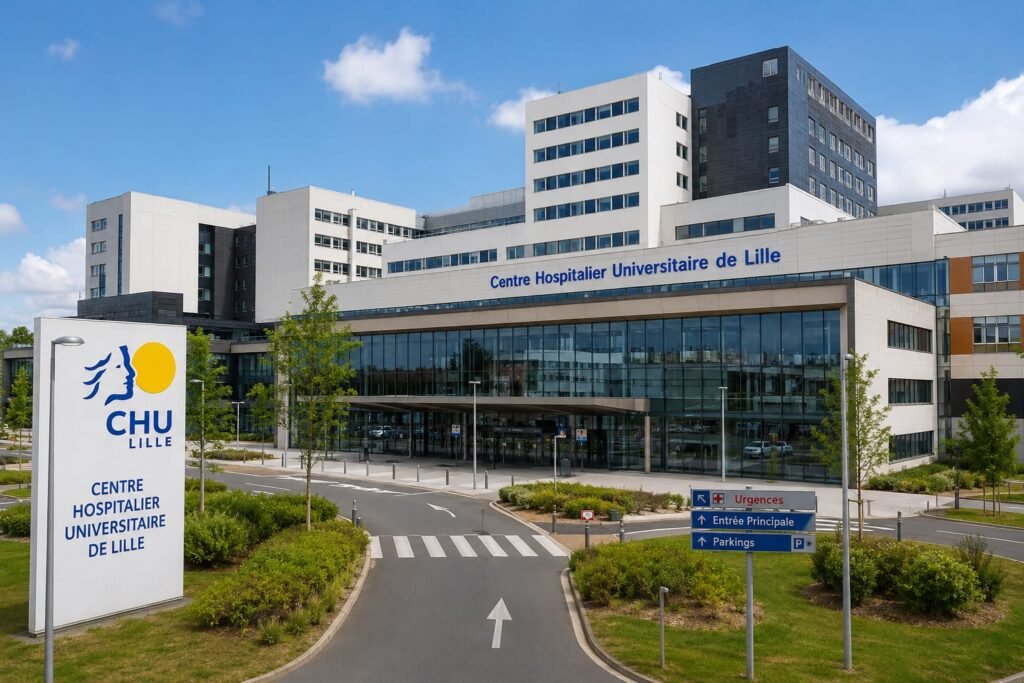
Lille University Hospital (France): A Global Hub for Modern Medicine, Research, and Excellence in Healthcare
Introduction
When discussing the world’s best university hospitals, France’s Lille University Hospital (*Centre Hospitalier Universitaire de Lille* – CHU Lille) stands out as an institution that has established a strong reputation in the fields of medical care, research, and medical education. Located in the city of Lille in northern France, this hospital is not merely a treatment center; it is a major hub of knowledge, innovation, and experience for thousands of doctors, researchers, and medical students.
Every year, hundreds of thousands of patients visit the hospital to avail themselves of a wide range of healthcare services. It offers high-level medical facilities covering everything from common ailments to complex surgeries, cancer treatment, cardiology, neurology, pediatrics, and organ transplantation. Thanks to modern technology, a team of experienced specialists, and patient-centric services, the hospital is ranked among Europe’s most prestigious university hospitals.
In this article, we will explore in detail the history, development, key departments, specialized facilities, research activities, and international standing of Lille University Hospital.
Brief Overview of the Hospital
Lille University Hospital is one of the largest public university hospitals in France. In addition to providing healthcare services, it plays a vital role in medical research and the training of physicians.
The hospital operates under the French public health system. Consequently, special emphasis is placed on research and education alongside the quality of medical care.
Today, the hospital is a highly respected institution—both nationally and internationally—renowned for its modern medical equipment, digital health services, state-of-the-art operating theaters, and team of expert physicians.
History and Development
Lille University Hospital has evolved over several decades. Over time, new buildings, modern medical equipment, and specialized departments have been added. The hospital has continuously expanded its infrastructure and services to meet changing medical needs.
It played a significant role during the modernization of healthcare services in France. The concept of integrating medical education with research gave it a unique identity compared to other hospitals.
Today, the hospital is recognized for its advanced medical services not only in France but across Europe.
Significance of Location
The city of Lille is a major educational and economic hub in northern France. Its geographical location connects it to many major European cities.
Consequently, patients from various regions of France, as well as from Belgium and neighboring countries, come to Lille University Hospital for treatment.
Excellent transport infrastructure, modern urban amenities, and the presence of universities make this hospital an ideal location for both medical practice and education.
Contribution to Medical Education
The hospital serves as an excellent training center for medical students. Here, students gain practical experience by working with real patients under the supervision of experienced doctors.
During their medical training, students are educated in modern technologies, clinical decision-making processes, and holistic patient care.
As a result, many doctors trained here go on to serve in leading hospitals across France and other countries.
Research and Innovation
Lille University Hospital plays a pioneering role in medical research.
Continuous work is carried out on numerous scientific projects aimed at developing new medicines, improved treatment methods, and modern medical technologies.
The hospital’s researchers collaborate with universities, national health institutes, and international organizations to conduct research on various diseases.
Significant research is conducted, particularly in the following areas:
- Cancer
- Cardiovascular diseases
- Neurological disorders
- Diabetes
- Infectious diseases
- Rare diseases
- Genetic medicine
- Digital health
Future patients benefit from this research through improved treatment options.
Modern Medical Facilities
Over time, the hospital has rapidly adopted modern healthcare technologies.
Key facilities available here include:
- High-tech operating theaters
- Modern MRI and CT scanners
- Digital X-ray systems
- State-of-the-art laboratories
- Intensive Care Units (ICU)
- Advanced emergency medical systems
- Specialized robotic-assisted surgical procedures
- Digital medical record systems
These facilities enable doctors to provide more accurate diagnoses and treatments.
Key Medical Departments
Specialists across virtually every major medical field are available at Lille University Hospital.
Key departments include—
Cardiology Department
This department provides cardiac examinations, angiography, complex surgeries, and advanced cardiac treatments.
Neurology and Neurosurgery
Experienced specialists treat serious conditions affecting the brain and spinal cord.
Oncology Department
Services include the diagnosis of various types of cancer, chemotherapy, radiotherapy, and multidisciplinary treatment planning.
Pediatrics
Specialized medical services are available for children ranging from newborns to adolescents.
Women’s Health and Obstetrics Department
Services related to women’s health, pregnancy, and childbirth
Emergency Medical Services
A major university hospital is defined by its emergency services, and Lille University Hospital is considered excellent in this area. Its 24-hour emergency department provides immediate medical assistance for severe accidents, heart attacks, strokes, respiratory issues, and other critical situations.
The hospital’s specialized trauma team—comprising anesthesiologists, surgeons, and intensive care specialists—collaborates to treat patients rapidly, thereby increasing the likelihood of better outcomes even in critical conditions.
Digital Health and Modern Technology
In today’s world, the importance of digital technology in healthcare is constantly growing. Lille University Hospital has adopted various modern digital solutions to enhance patient convenience and the quality of care.
These include—
- Electronic Medical Records
- Digital imaging systems
- Advanced diagnostic equipment
- Modern laboratory networks
- Secure management of medical data
- Rapid coordination among specialists
Thanks to these technologies, patient test reports become available quickly, and the treatment process becomes more streamlined and organized.
Multidisciplinary Treatment System
The opinion of a single doctor is often insufficient for treating complex diseases. Therefore, at Lille University Hospital, various specialists collaborate to formulate a treatment plan for the patient.
For instance, if a patient has cancer alongside other conditions like heart disease or diabetes, oncologists, cardiologists, endocrinologists, and other specialists work together to devise the best treatment strategy.
This system helps provide safer and more balanced medical care to the patient.
International Collaboration
Lille University Hospital collaborates with numerous prestigious universities, research institutes, and health organizations across Europe and the world.
Through this collaboration—
- Joint research projects are conducted.
- Medical students and doctors are exchanged.
- Work is done on new medical technologies.
- Participation in international clinical trials takes place.
- Shared research on rare diseases is undertaken.
In this way, the hospital remains connected to the global medical community.
Medical Quality and Safety
The success of any hospital is measured not only by modern equipment but also by the quality of treatment and patient safety.
Lille University Hospital adheres to established protocols for infection control, hygiene, medication management, surgical safety, and quality assessment.
The hospital regularly reviews its services to ensure patients receive safe and effective treatment.
Benefits Derived from Research
The hospital does not merely treat current patients; it also strives to improve the future of medicine.
Research conducted here leads to—
- The development of new treatment methods.
- Early detection of diseases.
- Studies on new medications.
- Increased use of modern medical equipment.
- Progress towards personalized treatment.
Thus, the hospital contributes to the advancement of medical science.
Facilities Available for Patients
Beyond medical treatment, the hospital also prioritizes the comfort and convenience of patients and their families.
Various services are available, such as—
- Comfortable waiting areas
- Guidance and information assistance
- Rehabilitation services
- Nutritional advice
- Psychological support
- Assistance from social workers
- Support for patients with special needs
The aim of these facilities is to enhance the patient’s experience during treatment.
Future Direction
The healthcare sector is evolving rapidly, and Lille University Hospital is continuously adapting to meet future needs.
Areas of special focus for the future include—
- AI-based medical assistance
- Precision medicine
- Digital health platforms
- Expansion of robotic surgery
- Research on gene-based therapies
- Environmentally friendly healthcare services
- Next-generation medical education
These initiatives aim to provide even better healthcare services to patients in the coming years.
Key Features of Lille University Hospital
Some of the hospital’s key features include—
- One of France’s leading university hospitals.
- A combined center for medicine, education, and research.
- Modern diagnostic and treatment facilities. – Availability of various specialized departments.
- International research collaborations.
- A key institution for the training of medical students.
- Special focus on patient-centered healthcare services.
Effective use of advanced technologies.
Interesting Facts
- This hospital is counted among the most important healthcare institutions in Northern France.
- Thousands of healthcare professionals and specialists work here across various fields.
- The hospital plays a vital role in both medical research and university education.
- Multidisciplinary specialist teams work here to treat numerous complex diseases.
- Its international reputation has been strengthened by the adoption of modern medical technologies.
Conclusion
Lille University Hospital is not merely a hospital but an exemplary model of modern medicine, higher education, and scientific research. Here, experienced doctors, modern technology, a multidisciplinary treatment approach, and patient-centric services combine to deliver high-quality healthcare.
For anyone seeking information about France’s leading university hospitals, Lille University Hospital certainly stands out as an institution that has made significant contributions to medical science, research, and patient care. In the years to come, the hospital will continue to play a pivotal role in advancing global healthcare through new technologies and research.
Frequently Asked Questions (FAQ)
1. Where is Lille University Hospital located?
It is a major university hospital located in the northern French city of Lille.
2. Is it a university hospital?
Yes, it is a university hospital that operates across three key areas: medical care, medical education, and research.
3. What conditions are treated here?
Specialized services are available for conditions such as heart disease, cancer, neurological disorders, and orthopedic issues, alongside pediatrics, women’s health, emergency medicine, and more.
4. Does the hospital conduct medical research?
Yes, continuous research is conducted here on various diseases, new medications, and modern treatment techniques.
5. What is the most notable feature of Lille University Hospital?
Its standout feature is the integration of high-quality medical care, medical education, modern technology, and world-class research within a single institution.
Looking for Advanced Medical Care at Lille University Hospital?
Click Here ➜Hospices Civils de Lyon (Lyon)
Click Here ➜Toulouse University Hospital (Purpan & Rangueil)
Click Here ➜Pitié-Salpêtrière University Hospital (AP-HP, Paris)
Click Here ➜University College London Hospital NHS Trust
Click Here ➜Oxford University Hospital (Oxford, UK)
One Comment
Pingback: