University College London Hospital NHS Trust
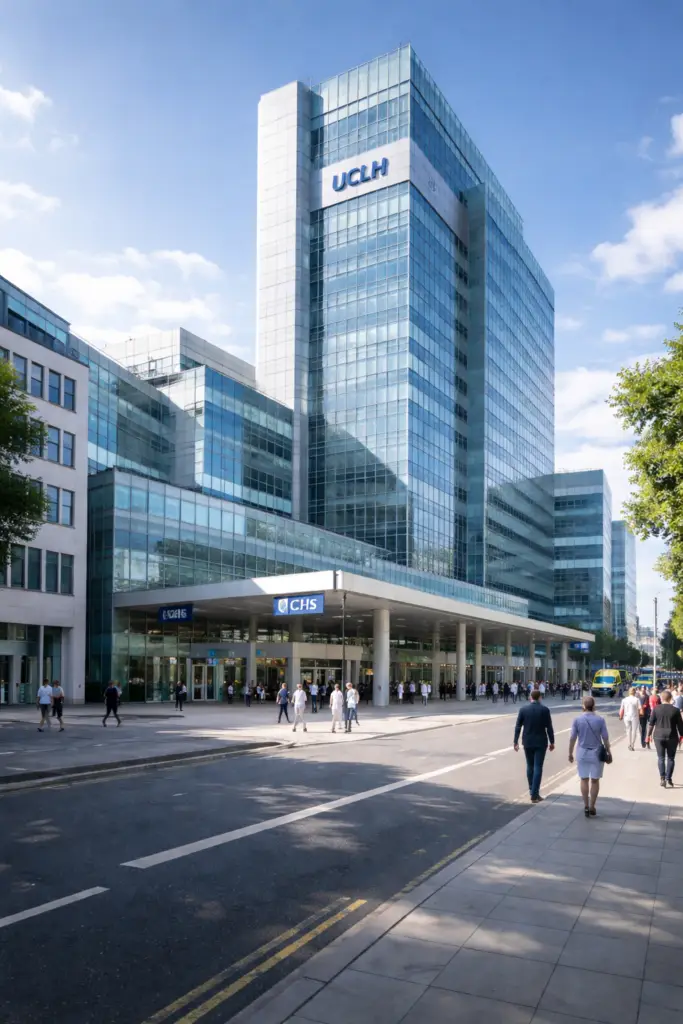
University College London Hospitals NHS Foundation Trust: Where Medical Innovation Meets Exceptional Patient Care
Introduction
Healthcare excellence is rarely defined by a single achievement. Instead, it is built through decades of clinical expertise, scientific discovery, investment in innovation, and an unwavering commitment to improving patients’ lives. University College London Hospitals NHS Foundation Trust (UCLH) represents this philosophy at every level.
Located in central London, UCLH is widely recognised as one of the United Kingdom’s leading academic healthcare organisations. Rather than operating as a traditional hospital, it functions as a comprehensive network of specialist hospitals and clinical centres that collectively provide highly advanced healthcare across dozens of medical disciplines. Every year, patients from across the United Kingdom and around the world choose UCLH for its reputation in complex diagnosis, cutting-edge treatments, multidisciplinary expertise, and internationally respected research programmes.
What truly distinguishes UCLH is its ability to combine world-class patient care with scientific innovation. Its close collaboration with University College London enables researchers and clinicians to translate laboratory discoveries into real clinical treatments, ensuring patients benefit from some of the latest advances in modern medicine. From pioneering cancer therapies and robotic surgery to precision medicine, neuroscience, cardiovascular care, and rare disease management, UCLH continues to influence healthcare far beyond London’s borders.
For patients, the Trust represents confidence, expertise, and access to some of the most specialised medical services available within the NHS.
Understanding University College London Hospitals NHS Foundation Trust
Unlike many healthcare organisations that consist of a single medical facility, UCLH is a network of specialist hospitals working together to provide integrated healthcare. Each hospital within the Trust focuses on particular clinical specialties while remaining connected through shared medical expertise, digital infrastructure, multidisciplinary teams, and collaborative decision-making.
This structure allows specialists from different disciplines to work together when patients require complex or multi-specialty treatment. Instead of consulting departments in isolation, clinicians regularly collaborate through multidisciplinary team meetings where surgeons, physicians, radiologists, pathologists, specialist nurses, therapists, and researchers collectively review individual cases before recommending personalised treatment plans.
Such collaboration has become one of the defining characteristics of UCLH and contributes significantly to its consistently high standards of patient care.
From Historic Foundations to Modern Healthcare Leadership
The story of UCLH reflects the evolution of British healthcare itself. Its origins can be traced back to some of London’s historic teaching hospitals, institutions that played an important role in educating generations of doctors and advancing medical science.
As healthcare needs evolved throughout the twentieth and twenty-first centuries, these hospitals were brought together under a unified organisation capable of delivering increasingly specialised services. Significant investment transformed traditional hospital buildings into technologically advanced medical environments featuring modern operating theatres, sophisticated imaging departments, specialist treatment centres, and digitally integrated clinical systems.
Today, UCLH continues to evolve through ongoing investment in infrastructure, medical equipment, digital healthcare, sustainability, and workforce development. While its historic legacy remains an important part of its identity, the organisation consistently looks towards the future, embracing innovation to improve patient outcomes.
Why UCLH Is Regarded as One of the UK's Leading NHS Trusts
Many hospitals deliver excellent healthcare, but relatively few combine clinical excellence, medical research, education, and innovation on the scale achieved by UCLH.
Several factors contribute to its international reputation:
Academic Partnership
Its close relationship with University College London creates one of Europe’s strongest academic healthcare partnerships. Researchers and clinicians collaborate daily, accelerating the development of new diagnostic techniques, medicines, and treatment pathways.
Highly Specialised Expertise
Rather than focusing only on general healthcare, UCLH provides specialist services for complex diseases requiring advanced knowledge and multidisciplinary management.
Innovation-Led Care
Clinical teams actively adopt emerging technologies that improve diagnosis, treatment precision, surgical outcomes, and patient safety.
Comprehensive Care Pathways
Patients receive coordinated care from diagnosis through treatment, rehabilitation, long-term monitoring, and supportive services, reducing fragmentation and improving continuity of care.
Commitment to Research
Thousands of patients participate in clinical research studies each year, helping develop future treatments while gaining access to innovative therapies under carefully regulated conditions.
A Network of Hospitals Delivering Integrated Specialist Care
One of UCLH’s greatest strengths lies in its network model. Rather than concentrating all services in one location, different hospitals within the Trust specialise in particular areas of medicine while remaining closely connected.
This integrated network supports expertise across:
- Comprehensive cancer treatment
- Neurology and neurosurgery
- Cardiovascular medicine
- Ear, nose and throat services
- Ophthalmology
- Women’s health
- Infectious diseases
- Tropical medicine
- Orthopaedics
- Urology
- Rehabilitation medicine
- Emergency and acute care
- Diagnostic imaging
- Specialist surgery
Patients therefore benefit from coordinated referrals between experts without needing to navigate multiple independent healthcare providers.
Centres of Clinical Excellence
Cancer Care
Cancer services represent one of the Trust’s internationally recognised strengths.
Specialists manage both common and rare cancers using highly personalised treatment strategies developed through multidisciplinary collaboration. Medical oncologists, radiation oncologists, surgeons, radiologists, pathologists, pharmacists, specialist nurses, genetic counsellors, psychologists, dietitians, and rehabilitation professionals all contribute to individual treatment planning.
Modern cancer care at UCLH extends far beyond chemotherapy. Depending on the patient’s diagnosis, treatment may include precision medicine, targeted therapies, immunotherapy, image-guided radiotherapy, minimally invasive surgery, genomic testing, or participation in clinical trials evaluating emerging therapies.
Supportive care also plays a central role, helping patients manage physical symptoms, emotional wellbeing, nutrition, rehabilitation, and survivorship after treatment has ended.
Neurosciences
Neurological disorders often require highly specialised expertise, advanced imaging, and coordinated multidisciplinary care.
UCLH provides diagnosis and treatment for conditions including:
- Brain tumours
- Epilepsy
- Stroke
- Parkinson’s disease
- Multiple sclerosis
- Motor neurone disease
- Dementia
- Complex spinal disorders
- Peripheral nerve disorders
- Neuromuscular diseases
Clinicians utilise sophisticated MRI technology, functional imaging, neurophysiology, minimally invasive procedures, and evidence-based rehabilitation programmes to improve both neurological function and quality of life.
Because many neurological illnesses are chronic, patients receive ongoing support from multidisciplinary teams that continue well beyond initial diagnosis.
Cardiovascular Medicine
Heart disease remains one of the world’s leading health challenges, making specialist cardiovascular care increasingly important.
UCLH’s cardiology services combine prevention, early diagnosis, interventional procedures, imaging, rehabilitation, and long-term disease management.
Areas of expertise include coronary artery disease, heart rhythm disorders, heart failure, inherited cardiac conditions, hypertension, structural heart disease, and cardiovascular risk assessment.
Advanced diagnostic imaging enables clinicians to detect heart disease earlier while minimally invasive procedures help reduce recovery times and improve clinical outcomes.
Women's Health and Reproductive Medicine
Women’s healthcare at UCLH spans every stage of life, from adolescence through menopause and beyond.
Specialist services include:
Gynaecology
Fertility medicine
Maternal medicine
High-risk pregnancy care
Reproductive endocrinology
Pelvic health
Menopause clinics
Minimally invasive gynaecological surgery
Individualised treatment planning ensures women receive care that reflects both their medical needs and personal preferences.
Advanced Surgery
Modern surgery increasingly focuses on improving outcomes while minimising recovery time.
Across multiple specialties, UCLH has adopted advanced minimally invasive techniques that reduce surgical trauma without compromising effectiveness.
Benefits frequently include:
- Smaller incisions
- Reduced blood loss
- Lower infection risk
- Less postoperative pain
- Shorter hospital stays
- Faster return to daily activities
- Improved cosmetic outcomes
Robotic-assisted procedures have further enhanced surgical precision, particularly for complex urological, colorectal, oncological, and gynaecological operations.
Research as a Driver of Better Healthcare
At many hospitals, research exists alongside patient care. At UCLH, research is integrated into everyday clinical practice.
Clinicians actively collaborate with scientists, engineers, data specialists, and academic researchers to answer important medical questions that directly influence patient treatment.
Research programmes span numerous specialties, including:
- Precision oncology
- Genomic medicine
- Artificial intelligence in healthcare
- Cardiovascular disease
- Rare genetic disorders
- Neuroscience
- Infectious diseases
- Digital health technologies
- Regenerative medicine
- Advanced diagnostics
This research culture enables many patients to access innovative clinical trials while contributing to discoveries that may improve healthcare worldwide.
Delivering Care Beyond Clinical Treatment
Outstanding healthcare extends beyond diagnosis and medical procedures. At University College London Hospitals NHS Foundation Trust (UCLH), patient care is designed to support every stage of the healthcare journey—from the first consultation to long-term recovery and follow-up.
The Trust places significant emphasis on communication, shared decision-making, and personalised treatment planning. Patients are encouraged to understand their condition, discuss available treatment options, and participate in decisions affecting their care.
This patient-centred philosophy helps create stronger relationships between healthcare professionals and patients while improving confidence, satisfaction, and overall health outcomes.
International Patient Services
Although UCLH primarily serves patients through the National Health Service (NHS), it also welcomes international patients seeking specialist medical expertise.
Patients travelling from overseas often choose UCLH because of its internationally recognised clinicians, advanced diagnostic capabilities, and strong reputation in complex medical conditions.
International patient support may include:
- Assistance before arrival
- Appointment coordination
- Treatment planning
- Cost guidance for private care
- Interpreter services where required
- Coordination between multiple specialists
- Post-treatment follow-up planning
For patients with rare diseases or conditions requiring highly specialised expertise, having access to coordinated multidisciplinary care can be a significant advantage.
Digital Healthcare and Modern Medical Technology
Healthcare continues to evolve through digital innovation, and UCLH has invested extensively in technologies that enhance both patient care and clinical efficiency.
Across the Trust, digital systems support:
- Electronic health records
- Secure sharing of clinical information
- Advanced diagnostic imaging
- Artificial intelligence-assisted analysis
- Remote monitoring for selected conditions
- Digital appointment management
- Electronic prescribing
- Clinical decision-support systems
These technologies help reduce delays, improve communication between healthcare teams, minimise medication errors, and enable more personalised treatment planning.
Precision Medicine: Personalising Treatment
One of the most significant developments in modern medicine is the move away from a “one-size-fits-all” approach to healthcare.
UCLH increasingly applies precision medicine by considering factors such as:
- Genetic information
- Tumour biology
- Disease characteristics
- Lifestyle factors
- Previous treatment response
- Individual risk profiles
This personalised approach is particularly valuable in oncology, rare diseases, neurology, and inherited conditions, where treatment can be tailored to the unique needs of each patient.
Education and Training the Next Generation of Healthcare Professionals
As a leading academic NHS Trust, UCLH plays a vital role in educating future doctors, nurses, pharmacists, therapists, scientists, and allied healthcare professionals.
Students and trainees benefit from:
- Clinical placements
- Specialist teaching
- Research opportunities
- Simulation-based education
- Multidisciplinary learning
- Continuing professional development
This strong educational environment helps ensure that future healthcare professionals are trained using the latest evidence-based practices while maintaining high standards of compassionate patient care.
Commitment to Patient Safety and Quality Improvement
Patient safety is a continuous priority across every department.
Clinical teams regularly review outcomes, monitor quality indicators, and implement improvements based on evidence and patient feedback.
Quality initiatives focus on:
- Reducing healthcare-associated infections
- Medication safety
- Surgical safety
- Early recognition of patient deterioration
- Improving communication
- Reducing waiting times where possible
- Enhancing discharge planning
A culture of continuous learning supports ongoing improvements in healthcare delivery.
Sustainability in Healthcare
Modern hospitals have an important responsibility to reduce their environmental impact while maintaining high-quality patient care.
UCLH has introduced initiatives aimed at improving sustainability through:
- Energy-efficient hospital buildings
- Reduced carbon emissions
- Waste reduction programmes
- Sustainable procurement
- Digital documentation
- Environmentally responsible clinical practices where appropriate
These efforts contribute to broader NHS goals of creating a more sustainable healthcare system for future generations.
Why Patients Choose UCLH
Several factors contribute to the Trust’s international reputation:
- One of the UK’s leading academic healthcare organisations
- Access to internationally recognised medical specialists
- Strong partnership with University College London
- Comprehensive multidisciplinary care
- Advanced diagnostic and imaging technology
- Expertise in complex and rare conditions
- Active participation in clinical research
- Personalised treatment planning
- Modern digital healthcare infrastructure
- Commitment to continuous innovation and education
Together, these strengths make UCLH a trusted destination for both routine specialist care and highly complex medical cases.
Frequently Asked Questions (FAQs)
What is University College London Hospitals NHS Foundation Trust known for?
UCLH is internationally recognised for specialist services in cancer care, neurosciences, cardiovascular medicine, robotic surgery, women’s health, infectious diseases, and academic medical research.
Is UCLH part of the NHS?
Yes. UCLH is one of England’s leading NHS Foundation Trusts, providing specialist and general healthcare services while also supporting research and medical education.
Does UCLH treat international patients?
Yes. International patients can access specialist services through the Trust’s international patient programme, subject to applicable arrangements and eligibility.
Why is UCLH considered an academic medical centre?
Its close partnership with University College London integrates clinical care, research, innovation, and education, allowing scientific discoveries to be translated into patient care.
Does UCLH participate in clinical research?
Yes. The Trust is involved in numerous national and international clinical research programmes across a wide range of medical specialties.
What types of advanced technology are used at UCLH?
The Trust uses advanced medical imaging, robotic-assisted surgery, genomic medicine, electronic health records, digital diagnostics, and other innovative healthcare technologies to support patient care.
Conclusion
University College London Hospitals NHS Foundation Trust has established itself as one of the United Kingdom’s most respected healthcare organisations by combining specialist expertise, academic excellence, advanced technology, and patient-centred care.
Its integrated network of specialist hospitals, close collaboration with University College London, and commitment to research enable the Trust to deliver healthcare that extends beyond routine treatment. From complex cancer therapies and neurological care to cardiovascular medicine, precision diagnostics, and innovative clinical research, UCLH continues to influence healthcare both nationally and internationally.
For patients seeking highly specialised medical expertise supported by evidence-based practice and multidisciplinary collaboration, UCLH remains one of London’s leading centres of excellence.
Click Here ➜Great Ormond Street Hospital for Children NHS Trust
Click Here ➜Guy’s & Saint Thomas NHS Foundation Trust
Click Here ➜Royal Free London NHS Foundation Trust
Click Here ➜NYU Langone Hospital (New York, NY)
Click Here ➜Barts and the London NHS Trust
3 Comments
Pingback:
Pingback:
Pingback: