Great Ormond Street Hospital for Children NHS Trust
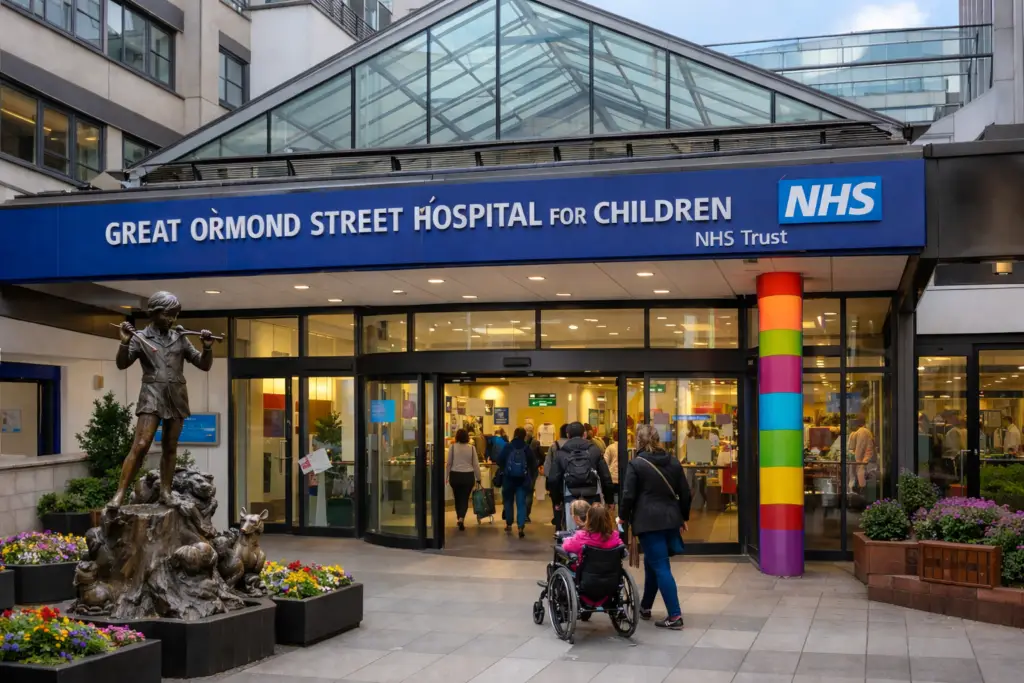
Great Ormond Street Hospital for Children NHS Trust: Transforming Children's Healthcare Through Innovation and Compassion
When parents face the challenge of finding advanced medical care for a child with a rare or complex condition, choosing the right hospital becomes one of the most important decisions they will ever make. Across the world, only a small number of children’s hospitals have developed the expertise, technology, and multidisciplinary approach needed to manage the most demanding paediatric cases. Among these institutions, Great Ormond Street Hospital for Children NHS Trust (GOSH) has earned an international reputation for combining clinical excellence with compassionate, family-focused care.
Located in central London, the hospital has become a destination for children requiring highly specialised diagnosis, treatment, surgery, rehabilitation, and long-term follow-up. Its work extends beyond routine healthcare, providing solutions for conditions that often require the collaboration of numerous specialists working together under one roof. This integrated approach has helped thousands of families receive coordinated care for illnesses that may not be treatable in many other healthcare centres.
Rather than focusing solely on medical treatment, the hospital emphasises supporting children physically, emotionally, and psychologically throughout every stage of their healthcare journey. Parents, guardians, and siblings are considered active members of the care team, creating an environment where families remain informed and involved in every important decision.
A Legacy Dedicated to Children's Health
For generations, Great Ormond Street Hospital has been associated with excellence in paediatric medicine. Over many decades, it has continuously expanded its specialist services while adapting to the rapidly changing landscape of modern healthcare. Today, it serves as one of the United Kingdom’s most respected centres for children’s medicine and remains recognised internationally for treating rare, inherited, and life-threatening diseases.
Its long-standing commitment to innovation has allowed the hospital to introduce new diagnostic techniques, surgical procedures, and treatment pathways that have improved outcomes for young patients. Medical professionals from around the world frequently collaborate with its specialists, helping to advance paediatric healthcare on a global scale.
The hospital’s influence reaches far beyond London, contributing to international clinical research, education, and healthcare policy focused on improving children’s lives.
Why Families Trust Great Ormond Street Hospital
Every child has unique medical needs, especially those living with complex conditions affecting multiple organs or body systems. One of the hospital’s defining strengths is its ability to bring together experts from various medical disciplines to develop personalised treatment plans.
Instead of requiring families to visit multiple healthcare facilities, patients often receive coordinated care from specialists in surgery, cardiology, neurology, genetics, oncology, respiratory medicine, intensive care, imaging, rehabilitation, nutrition, and psychology within the same healthcare system.
This collaborative model helps improve communication between healthcare professionals while reducing delays in diagnosis and treatment.
Families also appreciate the hospital’s emphasis on:
- Individualised treatment planning
- Shared decision-making with parents
- Child-friendly clinical environments
- Emotional and psychological support
- Long-term follow-up programmes
- Continuous communication throughout treatment
These elements create a healthcare experience designed specifically around the needs of children and their families.
Areas of Specialist Expertise
One reason for the hospital’s international recognition is the wide range of highly specialised paediatric services available.
These include care for children affected by:
- Rare genetic disorders
- Complex congenital abnormalities
- Childhood cancers
- Neurological diseases
- Heart defects
- Kidney disorders
- Liver diseases
- Blood disorders
- Respiratory illnesses
- Metabolic conditions
- Endocrine disorders
- Gastrointestinal diseases
- Orthopaedic conditions
- Craniofacial abnormalities
- Immunological disorders
Many of these illnesses require highly experienced multidisciplinary teams capable of delivering advanced treatments unavailable in general hospitals.
Excellence in Rare Disease Diagnosis
Rare diseases often present one of the greatest challenges in modern medicine. Symptoms may overlap with common illnesses, making diagnosis difficult and delaying appropriate treatment.
Great Ormond Street Hospital has developed extensive expertise in identifying uncommon childhood conditions through advanced clinical assessment and sophisticated laboratory investigations.
Specialists work closely with experts in genetics, pathology, radiology, molecular medicine, and laboratory sciences to establish accurate diagnoses as early as possible.
Earlier diagnosis often allows:
- Faster treatment initiation
- Improved disease management
- Better long-term outcomes
- More personalised therapies
- Enhanced family counselling
- Appropriate genetic advice for future pregnancies
This integrated diagnostic approach has significantly improved care for children living with complex inherited disorders.
Advanced Surgical Servicesre
Many young patients referred to Great Ormond Street Hospital require procedures considered among the most technically demanding in paediatric surgery.
The hospital performs numerous highly specialised operations involving delicate organs and developing body systems where precision is essential.
Its surgical expertise includes procedures involving:
- Brain and nervous system
- Heart and major blood vessels
- Airways
- Digestive tract
- Liver
- Kidneys
- Bones and joints
- Craniofacial reconstruction
- Ear, nose and throat conditions
Modern surgical planning uses detailed medical imaging alongside multidisciplinary discussions to determine the safest and most effective treatment strategy for each child.
Enhanced recovery programmes further support children before, during, and after surgery, helping reduce complications while encouraging quicker rehabilitation.
Research Driving the Future of Paediatric Medicine
Research remains central to the hospital’s mission.
Doctors, scientists, nurses, researchers, and academic partners work together to investigate better ways of diagnosing and treating childhood diseases. Clinical research programmes explore innovative therapies, new medicines, genetic discoveries, and advanced technologies that may improve future standards of care.
Many patients have opportunities to participate in carefully regulated clinical studies designed to evaluate emerging treatments while maintaining strict ethical and safety standards.
This close relationship between research and clinical practice allows new medical discoveries to reach patients more rapidly than in many traditional healthcare settings.
The hospital’s ongoing commitment to innovation continues to shape the future of paediatric healthcare both nationally and internationally.
Advanced Medical Technology Supporting Better Outcomes
Modern paediatric medicine relies on precise diagnostics and carefully planned treatments, particularly when caring for children with complex or rare conditions. Great Ormond Street Hospital for Children NHS Trust continues to invest in advanced medical technologies that assist clinicians in making accurate diagnoses while supporting safer and more effective treatment pathways.
Specialists use sophisticated imaging systems, minimally invasive surgical techniques where appropriate, advanced laboratory testing, and digital clinical planning tools to guide decision-making. These technologies are not intended to replace clinical expertise but to strengthen it, allowing multidisciplinary teams to make informed decisions tailored to each child’s individual needs.
Innovation is carefully balanced with patient safety, ensuring that every new approach undergoes rigorous evaluation before becoming part of routine clinical practice.
Family-Centred Care Beyond Medical Treatment
Healthcare for children extends beyond medication, surgery, and diagnostic tests. A child’s emotional wellbeing, education, and family environment all influence recovery and long-term health.
For this reason, Great Ormond Street Hospital places significant emphasis on family-centred care. Parents and guardians are encouraged to participate in discussions about treatment options, helping them understand each stage of the care journey and make informed decisions alongside healthcare professionals.
Support services may include:
- Clinical psychology
- Social work services
- Play specialists
- Educational support during hospital stays
- Nutritional guidance
- Rehabilitation programmes
- Palliative and supportive care when appropriate
- Family information resources
This holistic model recognises that successful healthcare involves caring for the entire family, not only the patient.
Education, Training, and Global Collaboration
As one of the world’s leading paediatric institutions, the hospital also plays a vital role in educating the next generation of healthcare professionals.
Doctors, nurses, pharmacists, therapists, scientists, and allied health professionals receive advanced specialist training through clinical placements, research programmes, and continuing professional development.
The hospital also collaborates with national and international healthcare organisations, universities, and research partners to exchange expertise, develop clinical guidelines, and improve standards of paediatric care worldwide.
These collaborations help ensure that new medical knowledge benefits children far beyond the United Kingdom.
Commitment to Innovation and Continuous Improvement
Healthcare continually evolves, and leading hospitals must adapt to changing medical evidence and emerging technologies.
Great Ormond Street Hospital actively evaluates new treatment approaches, digital healthcare solutions, and quality improvement initiatives designed to enhance patient safety and clinical outcomes.
Examples of ongoing areas of development include:
- Earlier disease detection
- Precision medicine
- Personalised treatment planning
- Advanced genomic research
- Improved infection prevention
- Enhanced patient safety systems
- Digital health technologies
- Better long-term follow-up care
Continuous improvement ensures that children receive healthcare based on the latest scientific evidence and internationally recognised clinical standards.
International Reputation
Although the hospital primarily serves patients within the National Health Service, its expertise is recognised across the world.
Healthcare professionals from many countries visit the hospital to observe specialist services, participate in research collaborations, and learn from experienced multidisciplinary teams. The hospital’s contributions to paediatric medicine have influenced clinical practice internationally, particularly in areas involving rare diseases, complex surgery, genetics, and specialised children’s healthcare.
Its reputation has been built through decades of clinical excellence, innovation, research, and compassionate patient care.
Looking Towards the Future
Children born with conditions that were once considered untreatable now have increasing opportunities because of advances in medicine, surgery, genetics, and research.
Great Ormond Street Hospital continues to contribute to this progress by combining world-class clinical expertise with scientific discovery, education, and family-centred healthcare.
As new therapies emerge and medical understanding continues to grow, the hospital remains committed to improving outcomes while ensuring that every child receives care tailored to their individual circumstances.
Frequently Asked Questions
What is Great Ormond Street Hospital for Children NHS Trust known for?
It is internationally recognised for specialist paediatric healthcare, rare disease management, complex surgery, clinical research, and multidisciplinary care for children.
Does the hospital only treat children?
Yes. Its services are focused on infants, children, and young people requiring specialist healthcare.
Why is the hospital internationally respected?
Its reputation comes from decades of expertise in treating complex childhood conditions, pioneering research, advanced surgical services, and collaborative multidisciplinary care.
Does the hospital participate in medical research?
Yes. Research is an important part of its work, supporting the development of new diagnostic methods, therapies, and treatment approaches for childhood diseases.
What makes the hospital different from a general hospital?
It provides highly specialised paediatric services delivered by multidisciplinary teams with expertise in complex and rare childhood conditions that often require advanced clinical management.
Conclusion
Great Ormond Street Hospital for Children NHS Trust represents one of the world’s most respected centres for specialist children’s healthcare. Through its combination of clinical expertise, multidisciplinary collaboration, pioneering research, advanced technology, and compassionate family-centred care, the hospital continues to improve the lives of children facing some of the most challenging medical conditions.
Its commitment to innovation and continuous improvement ensures that it remains at the forefront of paediatric medicine while helping shape the future of healthcare for children both in the United Kingdom and internationally.
Click Here ➜Barts and the London NHS Trust
Click Here ➜NHS Lothian
Click Here ➜Guy’s & Saint Thomas NHS Foundation Trust
Click Here ➜Royal Free London NHS Foundation Trust
One Comment
Pingback: