Cedars-Sinai Medical Center (Los Angeles, CA)
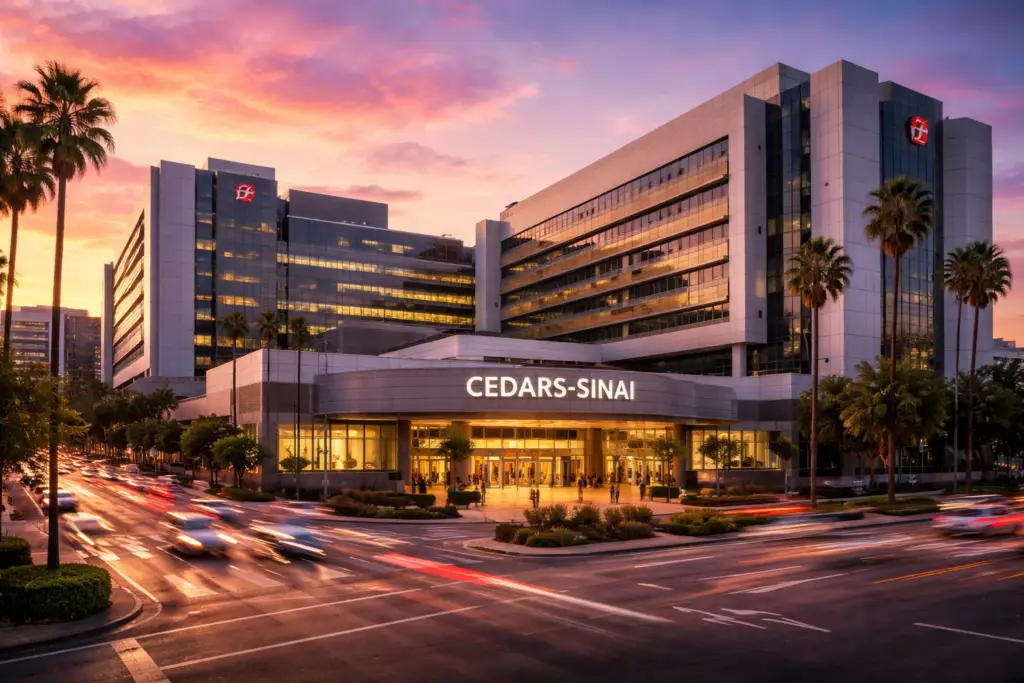
Cedars-Sinai Medical Center: A Global Leader in Healthcare
When discussing the best hospitals in the United States, Cedars-Sinai Medical Center consistently appears among the most respected names. Located in the heart of Los Angeles, California, this nonprofit academic medical center has earned a worldwide reputation for exceptional patient care, groundbreaking medical research, advanced surgical techniques, and innovative treatment programs.
Every year, the hospital serves more than one million patients through its hospital campus and extensive healthcare network. It is known for combining compassionate care with cutting-edge technology, making it a preferred destination for patients from across the United States and around the world.
Hospital Overview
Cedars-Sinai Medical Center is one of California’s largest nonprofit teaching hospitals. It offers comprehensive healthcare services across dozens of medical specialties while also training future physicians and conducting internationally recognized biomedical research.
Quick Facts
- Location: Los Angeles, California, USA
- Hospital Type: Nonprofit Academic Medical Center
- Founded: 1961 (formed through the merger of Cedars of Lebanon and Mount Sinai hospitals)
- Teaching Hospital: Yes
- Level I Trauma Center
- Licensed Beds: Approximately 919
- Patients Served: More than one million annually through its health system and clinics.
A Rich History of Medical Excellence
Cedars-Sinai’s roots date back more than a century. Two respected Los Angeles hospitals—Cedars of Lebanon Hospital and Mount Sinai Hospital—merged in 1961 to create Cedars-Sinai Medical Center.
Since then, the institution has grown from a regional hospital into one of America’s leading healthcare organizations. Its mission has remained focused on delivering outstanding patient care while advancing medicine through education and scientific research.
Why Cedars-Sinai Is Famous
Several factors make Cedars-Sinai internationally recognized:
- Highly experienced physicians across numerous specialties
- Advanced robotic and minimally invasive surgeries
- Comprehensive cancer treatment programs
- World-class cardiology and heart surgery
- Excellent neurology and neurosurgery services
- Innovative organ transplantation programs
- Strong commitment to clinical research
- Personalized patient-centered healthcare
Its combination of innovation and compassionate care has made it one of the most trusted healthcare institutions in the United States.
Major Medical Specialties
Cedars-Sinai provides treatment in virtually every major field of medicine.
Heart and Cardiovascular Care
The hospital is internationally recognized for diagnosing and treating complex heart conditions. Patients benefit from advanced imaging, minimally invasive cardiac procedures, structural heart interventions, electrophysiology services, and cardiac rehabilitation programs.
Cancer Care
The Samuel Oschin Comprehensive Cancer Institute offers multidisciplinary treatment for many forms of cancer, combining surgery, radiation therapy, chemotherapy, precision medicine, immunotherapy, and access to clinical trials.
Neurology and Neurosurgery
Experts at Cedars-Sinai treat conditions such as:
- Brain tumors
- Stroke
- Parkinson’s disease
- Epilepsy
- Alzheimer’s disease
- Spine disorders
- Multiple sclerosis
Patients benefit from advanced imaging technologies and specialized neurological care.
Orthopedics
The orthopedic department performs thousands of procedures annually, including:
- Knee replacement
- Hip replacement
- Sports injury treatment
- Shoulder surgery
- Spine surgery
- Joint preservation procedures
Research That Changes Medicine
One of Cedars-Sinai’s greatest strengths is its commitment to medical research. Scientists and physicians work together to translate laboratory discoveries into real treatments that improve patient outcomes.
The institution supports hundreds of active laboratories and numerous clinical research projects spanning cancer, cardiovascular disease, neuroscience, genetics, immunology, and many other fields. It is also consistently recognized among the leading independent biomedical research institutions in the United States.
Advanced Medical Technology
Cedars-Sinai Medical Center continually invests in cutting-edge medical technology to improve diagnosis, treatment, and patient outcomes. The hospital uses advanced imaging systems, robotic-assisted surgical platforms, artificial intelligence-supported diagnostics, and precision medicine approaches to provide personalized care.
Some of its technological strengths include:
- Robotic-assisted minimally invasive surgery
- High-resolution MRI and CT imaging
- Advanced radiation therapy systems
- Hybrid operating rooms
- Precision cancer treatments
- Digital patient monitoring
- AI-assisted clinical decision support
These innovations help physicians perform complex procedures with greater accuracy while reducing recovery time for many patients.
International Patient Services
Cedars-Sinai welcomes thousands of international patients each year. Dedicated coordinators help patients and their families throughout the treatment process.
Services include:
- Medical appointment scheduling
- Treatment planning
- Medical record review
- Interpreter services
- Travel assistance
- Accommodation guidance
- Insurance coordination
- Post-treatment follow-up
This comprehensive support makes the hospital a preferred destination for medical travelers worldwide.
Education and Physician Training
As a leading academic medical center, Cedars-Sinai plays an important role in educating future healthcare professionals.
The institution offers:
- Residency programs
- Fellowship training
- Continuing medical education
- Clinical research opportunities
- Medical simulation training
Its education programs attract talented physicians from around the world, contributing to high standards of patient care.
Awards and Recognition
Cedars-Sinai Medical Center has received numerous national and international recognitions for clinical excellence.
Highlights include:
- Ranked among the leading hospitals in the United States.
- Nationally recognized in multiple adult medical specialties.
- High-performing ratings for complex surgical procedures.
- Strong reputation for patient safety and quality improvement.
- International recognition for biomedical research and innovation.
These achievements reflect the hospital’s ongoing commitment to delivering exceptional healthcare.
Why Patients Choose Cedars-Sinai
Patients choose Cedars-Sinai because of its combination of medical expertise and compassionate care.
Key reasons include:
- Highly experienced specialists
- Advanced treatment options
- Excellent success rates
- Comprehensive cancer care
- World-class heart center
- Innovative neuroscience programs
- Modern hospital facilities
- Strong research foundation
- Personalized treatment plans
- International patient support
Patient Experience
Cedars-Sinai emphasizes patient-centered healthcare by ensuring that every patient receives individualized attention.
Patients often appreciate:
- Comfortable hospital environment
- Skilled nursing staff
- Efficient care coordination
- Modern diagnostic facilities
- Clear communication with physicians
- Comprehensive rehabilitation services
The hospital’s goal is to improve both clinical outcomes and the overall patient experience.
Frequently Asked Questions (FAQ)
1. Where is Cedars-Sinai Medical Center located?
It is located in Los Angeles, California, USA.
2. Is Cedars-Sinai a teaching hospital?
Yes. It is one of America’s leading academic medical centers with extensive residency and fellowship programs.
3. Does Cedars-Sinai treat international patients?
Yes. The hospital provides dedicated services for international patients, including interpreter support, appointment coordination, and travel assistance.
4. What specialties is Cedars-Sinai famous for?
It is especially known for cardiology, cancer treatment, neurology, neurosurgery, orthopedics, gastroenterology, and organ transplantation.
5. Why is Cedars-Sinai considered one of the best hospitals?
Its outstanding physicians, advanced technology, innovative research, excellent patient care, and strong clinical outcomes make it one of the world’s leading healthcare institutions.
Conclusion
Cedars-Sinai Medical Center has earned its reputation as one of the world’s premier hospitals through decades of excellence in patient care, medical research, education, and innovation. Whether patients require routine treatment or highly specialized care for complex medical conditions, the hospital offers access to experienced specialists, state-of-the-art technology, and comprehensive support services. Its commitment to improving healthcare continues to make it a trusted destination for patients from across the globe.
Looking for more world-class hospitals?
Click Here ➜ Mayo Clinic Health System (Rochester, USA)
Click Here ➜ Cleveland Clinic (Cleveland, USA)
Click Here ➜ Mass General Brigham (Boston, USA)
Click Here ➜ UCLA Medical Center (Loss Angeles, CA)
Click Here ➜ Houston Methodist Hospital ( Houston TX)
Click Here ➜ NYU Langone Hospital (New York, NY)
One Comment
Pingback: