St Bartholomew’s Hospital
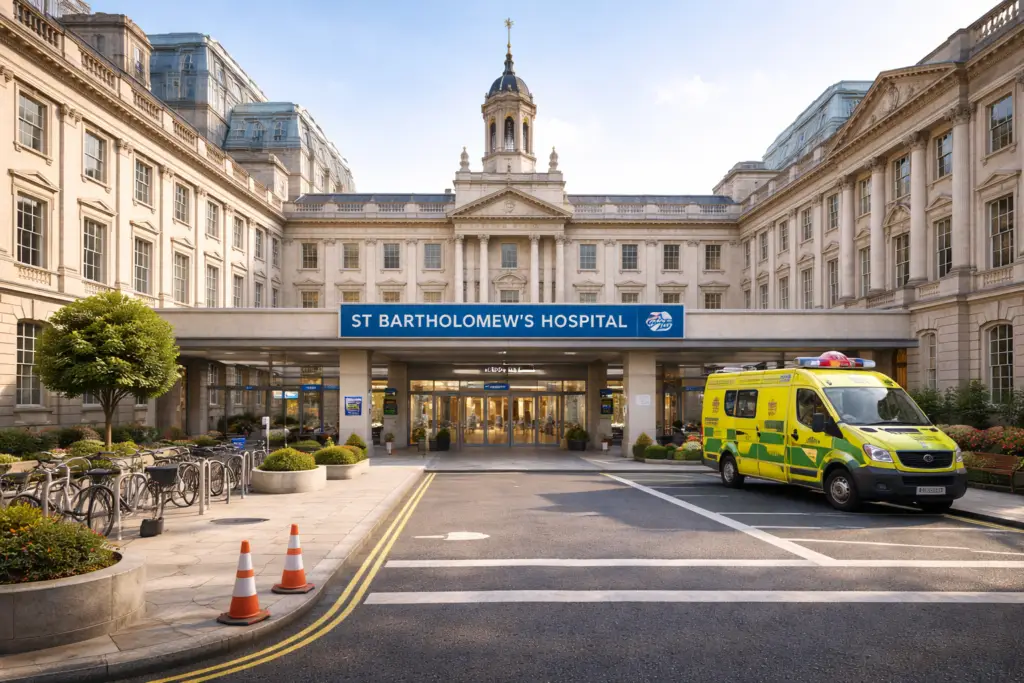
Bartholomew's Hospital: More Than Nine Centuries of Medical Excellence in the Heart of London
Introduction
Few healthcare institutions in the world possess a legacy as remarkable as St Bartholomew’s Hospital, often affectionately known as “Barts.” Situated in the historic City of London, this internationally respected teaching hospital has delivered continuous patient care for more than 900 years, making it one of the oldest hospitals still providing healthcare anywhere in the world.
While its remarkable history attracts global attention, St Bartholomew’s Hospital is far more than a historic landmark. Today, it stands as one of the United Kingdom’s foremost specialist hospitals, recognised for advanced cardiovascular medicine, cancer treatment, endocrinology, diabetes care, and cutting-edge clinical research. As part of Barts Health NHS Trust, the hospital combines centuries of medical tradition with state-of-the-art facilities, digital healthcare, and evidence-based clinical practice.
Patients from across the United Kingdom and beyond seek treatment at St Bartholomew’s Hospital not simply because of its reputation, but because it consistently delivers highly specialised care through multidisciplinary expertise, innovative technology, and an unwavering commitment to improving patient outcomes.
A Hospital That Has Shaped British Medicine
The story of St Bartholomew’s Hospital begins in the twelfth century, when healthcare was fundamentally different from the sophisticated systems seen today. Established in 1123, the hospital has survived wars, epidemics, political change, industrialisation, and the rapid evolution of modern medicine while continuously adapting to meet society’s healthcare needs.
Across successive generations, Barts has played a central role in developing medical education, surgical practice, hospital management, and clinical research within Britain. Countless physicians, surgeons, scientists, and healthcare professionals have trained within its walls, contributing to discoveries that have influenced medical practice worldwide.
Rather than preserving its historical significance as a museum of medicine, the hospital has continually reinvented itself, integrating modern technologies and specialist expertise while honouring a legacy spanning more than nine centuries.
Why St Bartholomew's Hospital Remains Internationally Respected
Many hospitals are recognised for excellence in a single speciality. St Bartholomew’s Hospital has built its reputation by combining historical prestige with highly specialised modern healthcare.
Several characteristics distinguish the hospital today.
Specialist Clinical Expertise
The hospital focuses on complex conditions requiring advanced investigation, highly experienced consultants, and multidisciplinary treatment planning.
Integration Within a Major NHS Network
As part of Barts Health NHS Trust, patients benefit from seamless collaboration between multiple hospitals, specialist centres, diagnostic services, and community healthcare providers.
Academic Collaboration
Close partnerships with leading universities and research institutions ensure that clinical care remains informed by the latest scientific discoveries and evidence-based medicine.
Continuous Innovation
Investment in digital infrastructure, advanced imaging, minimally invasive procedures, and precision medicine enables clinicians to deliver increasingly personalised healthcare.
Patient-Focused Care
Clinical excellence is supported by a philosophy that values communication, shared decision-making, dignity, and compassionate care throughout every stage of treatment.
Centres of Specialist Excellence
Unlike a general hospital that delivers every type of healthcare equally, St Bartholomew’s Hospital has developed internationally recognised expertise in several highly specialised disciplines.
Its major clinical strengths include:
- Cardiovascular medicine
- Cardiac surgery
- Cancer services
- Endocrinology
- Diabetes care
- Renal medicine
- Haematology
- Diagnostic imaging
- Specialist outpatient care
- Advanced surgical services
This concentration of expertise enables clinicians to manage some of the most challenging and complex medical conditions referred from hospitals across the United Kingdom.
Cardiovascular Medicine: A National Centre of Excellence
Perhaps no speciality is more closely associated with St Bartholomew’s Hospital than cardiovascular medicine.
The hospital provides comprehensive assessment and treatment for patients living with both common and highly complex heart conditions. Cardiologists, cardiac surgeons, specialist nurses, physiologists, imaging experts, rehabilitation professionals, and pharmacists work together to create personalised treatment plans tailored to each patient’s needs.
Clinical expertise includes:
- Coronary artery disease
- Heart valve disorders
- Heart rhythm abnormalities
- Heart failure
- Congenital heart disease
- Cardiomyopathy
- Pulmonary hypertension
- Inherited cardiac disorders
Patients benefit from sophisticated diagnostic investigations, advanced imaging technologies, minimally invasive procedures, and comprehensive rehabilitation programmes designed to support long-term cardiovascular health.
Advanced Cardiac Surgery
Cardiac surgery remains one of the hospital’s defining strengths.
Modern operating theatres support highly specialised procedures performed by multidisciplinary surgical teams experienced in treating both routine and exceptionally complex cardiovascular diseases.
Depending on clinical requirements, surgical treatment may include:
- Coronary artery bypass grafting (CABG)
- Heart valve repair
- Valve replacement surgery
- Aortic surgery
- Complex reconstructive procedures
- Minimally invasive cardiac surgery
Every surgical pathway is supported by intensive care specialists, anaesthetists, rehabilitation professionals, physiotherapists, and specialist cardiac nurses, ensuring continuity of care from pre-operative assessment through recovery.
Comprehensive Cancer Services
Cancer care at St Bartholomew’s Hospital reflects a multidisciplinary approach that extends far beyond treating the disease itself.
Patients receive coordinated care involving:
- Medical oncologists
- Clinical oncologists
- Cancer surgeons
- Radiologists
- Pathologists
- Specialist cancer nurses
- Dietitians
- Clinical psychologists
- Palliative care specialists
- Rehabilitation teams
Treatment strategies are tailored according to tumour biology, disease stage, genetic characteristics, and individual patient preferences.
Modern therapies may include chemotherapy, immunotherapy, targeted medicines, precision oncology, advanced radiotherapy, or participation in clinical research studies evaluating emerging treatments.
Endocrinology and Diabetes Care
Managing endocrine disorders requires highly specialised expertise because hormones influence nearly every system within the human body.
St Bartholomew’s Hospital provides comprehensive care for conditions including:
- Type 1 diabetes
- Type 2 diabetes
- Thyroid disease
- Pituitary disorders
- Adrenal disease
- Osteoporosis
- Metabolic disorders
- Complex hormonal conditions
Care extends beyond medication management, incorporating lifestyle education, long-term monitoring, nutritional guidance, and multidisciplinary support to help patients maintain the highest possible quality of life.
Diagnostic Excellence Through Advanced Medical Imaging
Accurate diagnosis forms the foundation of effective healthcare.
The hospital has invested extensively in advanced imaging technologies that support early detection, precise treatment planning, and ongoing monitoring of disease progression.
Specialist diagnostic services include:
- Cardiac MRI
- CT imaging
- PET scanning
- Ultrasound
- Echocardiography
- Nuclear medicine
- Interventional radiology
These technologies enable clinicians to visualise complex conditions with remarkable accuracy while supporting safer and more effective treatment decisions.
Research That Improves Patient Care
Research is not a separate activity carried out in isolated laboratories—it is woven into everyday clinical practice at St Bartholomew’s Hospital.
Consultants, scientists, nurses, and researchers collaborate to investigate new treatments, evaluate innovative technologies, and improve healthcare delivery across numerous medical specialties.
Research priorities include:
- Cardiovascular disease
- Cancer therapies
- Precision medicine
- Medical imaging
- Diabetes research
- Genomic medicine
- Digital healthcare
- Artificial intelligence in medicine
Many patients have opportunities to participate in carefully regulated clinical trials, contributing to medical advances that may benefit future generations while gaining access to emerging therapies.
A Culture of Multidisciplinary Collaboration
One of the hospital’s greatest strengths lies in the way specialists work together.
Rather than managing patients within isolated departments, multidisciplinary teams regularly meet to review investigations, discuss treatment options, and develop personalised care plans.
This collaborative approach helps ensure that every clinical decision reflects expertise from multiple healthcare disciplines, improving both safety and patient outcomes.
Looking Beyond Treatment: A Hospital Built Around Long-Term Outcomes
One of the defining characteristics of St Bartholomew’s Hospital is that healthcare does not end when a procedure is completed or a patient leaves the ward. The hospital has adopted a long-term approach in which recovery, rehabilitation, disease prevention, and ongoing monitoring are considered just as important as diagnosis and treatment.
For patients with chronic cardiovascular disease, diabetes, or cancer, follow-up appointments are carefully planned to monitor progress, adjust medications, identify complications early, and provide continued specialist support. This continuity of care helps reduce hospital readmissions while allowing patients to return to everyday life with greater confidence.
The Trust also recognises that successful healthcare depends on more than clinical expertise alone. Emotional wellbeing, patient education, nutritional guidance, physiotherapy, and specialist nursing all contribute to achieving the best possible outcomes.
Digital Transformation Supporting Better Healthcare
Modern hospitals increasingly depend on digital technology to improve efficiency and patient safety, and St Bartholomew’s Hospital has embraced this transformation across many aspects of clinical care.
Healthcare teams use integrated electronic systems that allow authorised clinicians to access medical information quickly and securely. This improves communication between departments, reduces duplication of investigations, and enables faster clinical decision-making.
Digital innovation supports many areas of care, including:
- Electronic patient records
- Digital imaging and diagnostics
- Electronic prescribing
- Secure multidisciplinary collaboration
- Appointment management
- Remote monitoring for selected conditions
- Data analysis to improve quality of care
By combining technology with clinical expertise, the hospital continues to improve accuracy, efficiency, and patient safety without losing its focus on compassionate healthcare.
Education: Preparing Tomorrow's Medical Leaders
St Bartholomew’s Hospital has long been recognised as one of Britain’s most influential teaching hospitals.
Medical students, trainee doctors, nurses, pharmacists, physiotherapists, radiographers, and many other healthcare professionals receive practical education within its specialist departments. Learning takes place not only through classroom teaching but also through direct involvement in patient care under the supervision of experienced consultants.
Education focuses on:
- Evidence-based medicine
- Ethical clinical practice
- Advanced diagnostic techniques
- Modern surgical skills
- Communication with patients and families
- Multidisciplinary teamwork
- Continuous professional development
By combining education with research and clinical practice, the hospital helps prepare healthcare professionals for the challenges of modern medicine.
Clinical Research Driving Medical Progress
Innovation remains central to the hospital’s identity.
Researchers and clinicians collaborate to investigate new medicines, improve existing treatments, evaluate medical technologies, and develop safer approaches to patient care. These studies often influence healthcare practice throughout the NHS and internationally.
Current areas of research include:
- Cardiovascular disease prevention
- Advanced cardiac imaging
- Precision oncology
- Diabetes and metabolic disorders
- Genomic medicine
- Artificial intelligence in healthcare
- Medical device development
- Population health research
Patients who meet eligibility criteria may also have opportunities to participate in carefully regulated clinical trials, contributing to future medical advances while accessing innovative therapies.
Supporting Patients Beyond the Hospital
Excellent healthcare extends beyond clinical treatment. Recognising this, St Bartholomew’s Hospital works alongside community healthcare providers to ensure patients continue receiving appropriate support after discharge.
Depending on individual needs, ongoing care may involve:
- Cardiac rehabilitation
- Specialist outpatient clinics
- Diabetes education programmes
- Medication reviews
- Physiotherapy
- Lifestyle counselling
- Nutritional advice
- Long-term monitoring for chronic conditions
This integrated approach helps patients manage their health more effectively while reducing the risk of future complications.
Why St Bartholomew's Hospital Continues to Stand Out
Several characteristics continue to strengthen the hospital’s reputation both nationally and internationally:
- More than nine centuries of continuous healthcare
- One of the United Kingdom’s oldest teaching hospitals
- Internationally recognised cardiovascular expertise
- Modern specialist cancer services
- Strong culture of clinical research
- Close collaboration between multiple medical specialties
- Advanced diagnostic technology
- Highly experienced consultant teams
- Commitment to patient-centred care
- Continuous investment in innovation and education
Rather than relying solely on its historic reputation, the hospital continues to evolve by embracing new technologies, evidence-based practice, and collaborative healthcare.
Frequently Asked Questions
Is St Bartholomew's Hospital one of the oldest hospitals in the world?
Yes. Founded in 1123, it is one of the world’s oldest hospitals that has continuously provided patient care.
What is St Bartholomew's Hospital best known for?
The hospital is particularly recognised for cardiovascular medicine, cardiac surgery, specialist cancer care, endocrinology, diabetes management, and academic medical research.
Is St Bartholomew's Hospital part of the NHS?
Yes. It operates as part of Barts Health NHS Trust, one of England’s largest NHS organisations.
Does the hospital participate in medical research?
Yes. Research is integrated into clinical practice, with projects covering cardiovascular medicine, cancer, genomics, diabetes, digital health, and other specialist areas.
Does St Bartholomew's Hospital provide specialist rather than general care?
Many of its services focus on highly specialised treatment, particularly for complex cardiovascular diseases and other advanced medical conditions.
Conclusion
For more than 900 years, St Bartholomew’s Hospital has demonstrated an extraordinary ability to adapt to changing healthcare needs while preserving its commitment to clinical excellence. Its unique combination of historic legacy, specialist expertise, advanced technology, academic collaboration, and research-driven innovation has established it as one of the United Kingdom’s most respected hospitals.
Today, patients benefit from multidisciplinary teams, sophisticated diagnostic facilities, modern treatment approaches, and a culture that values continuous improvement. Whether managing complex heart disease, delivering advanced cancer therapies, or contributing to internationally recognised medical research, St Bartholomew’s Hospital continues to shape the future of healthcare while honouring one of medicine’s richest traditions.
Explore Another Historic Centre of Medical Excellence in the UK
Click Here ➜University College London Hospital NHS Trust
Click Here ➜Guy’s & Saint Thomas NHS Foundation Trust
Click Here ➜Memorial Sloan Kettering Cancer Center (New York, NY)
Click Here ➜Cedars-Sinai Medical Center (Los Angeles, CA)
Click Here ➜Houston Methodist Hospital ( Houston TX)